

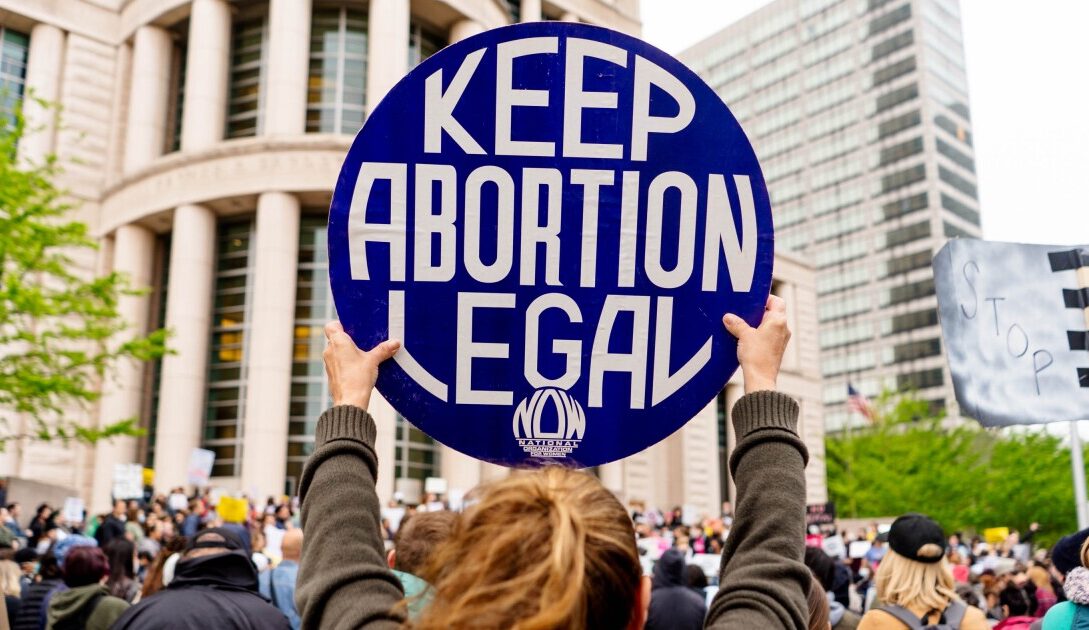
Missouri’s Planned Parenthood locations will begin providing medication abortions beginning next week for the first time since 2018 following a Jackson County judge’s decision to overturn multiple abortion restrictions on Thursday.
Although the ruling faces an appeal, Jackson County Judge Jerri Zhang’s decision represents one of the most significant legal developments since Missouri residents voted to approve an amendment safeguarding abortion rights in 2024.
“This major achievement for reproductive freedom and abortion availability is made possible thanks to the Right to Reproductive Freedom Amendment that Missouri voters approved in 2024,” Gillian Wilcox, litigation director at the ACLU of Missouri, stated.
State residents approved a constitutional measure, referred to as Amendment 3, that permits abortion until fetal viability, typically occurring around 24 weeks into pregnancy. Following the election, Missouri’s Planned Parenthood organizations filed suit to eliminate numerous abortion restrictions – such as the state’s near-complete prohibition on the procedure and facility licensing rules, which they contended contradicted the newly approved amendment.
Missouri Attorney General Catherine Hanaway criticized Thursday’s decision in a statement, declaring it was “precisely the Pandora’s box we cautioned about, and Missouri’s women will suffer the consequences.”
State representatives asserted during the 10-day trial earlier this year that these regulations existed to protect patient welfare.
On Thursday, Zhang sided with Planned Parenthood on the majority of its case – notably its challenge against the so-called complication plan for medication abortions. This outlines the steps clinics must follow if a medical crisis happens following a medication abortion.
Zhang had upheld the complication plan law in prior decisions but concluded on Thursday the regulation “is in conflict with Amendment 3’s language.”
She invalidated the vast majority of the 40 rules Planned Parenthood claimed breached the amended constitution, such as mandatory 72-hour waiting periods before abortion, physician hospital admitting requirements and facility design and staffing standards.
Zhang also determined against what Planned Parenthood termed a “telemedicine prohibition,” requiring patients to consume abortion medications under a doctor’s supervision.
In a press release, the heads of Planned Parenthood’s Kansas City and St. Louis branches stated that residents can start booking medication abortions through their website immediately and that the clinics will commence offering medication abortions the following week. Planned Parenthood initiated offering surgical abortions in 2025.
“Once more, the courts have confirmed Missourians’ fundamental constitutional right to obtain abortion free from government involvement or delays,” Margot Riphagen-Dunn, president and CEO of Planned Parenthood Great Rivers, announced. “The reality is, medication abortion is the most prevalent form of abortion care, and research shows it has been secure and reliable for the last 25 years. Yet, following Missourians’ 2024 decision supporting abortion availability, receiving complete abortion care has been unavailable in our state. That changes now.”
As reported by the Guttmacher Institute, medication abortion makes up approximately 63% of all abortions nationwide.
This is not finished
Hanaway objected to the removal of abortion provider restrictions, asserting, “the government is unable to even perform routine health and safety reviews to guarantee patient protection.”
She indicated her department plans to challenge the decision.
“This is not what Missouri citizens voted for,” Hanaway, a member of the Republican party, stated. “My department will promptly contest this troubling verdict to the Missouri Supreme Court, and I remain devoted to safeguarding women and children.”
Zhang anticipated that her verdict would encounter further legal proceedings.
“The judge has given extensive consideration to this issue and has endeavored to resolve this matter with urgency so the disputants may proceed with their legal contest to the Missouri Supreme Court,” she noted.
In November, Missourians are expected to cast ballots on a proposal, also designated Amendment 3, that would eliminate the 2024 amendment and institute a near-complete abortion prohibition. The measure would enable abortions through 12 weeks in cases of assault or incest and comprises provisions protecting maternal welfare and survival.
Supporters of the fresh Amendment 3 have emphasized gender-affirming care restrictions for minors in their promotional strategy . State legislators have already restricted puberty blockers, hormone treatments and gender-affirming surgical procedures for minors via law but did not extend a 2027 sunset clause during the recent legislative term.
Advocates for abortion access have committed to defeating Amendment 3 in November, asserting that the electorate has already decided.
“Abortion represents fundamental health care, and the court’s decision reflects this truth,” stated Maggie Olivia of Abortion Action Missouri. “Due to the November 2024 decision, Missouri residents possess a constitutional right to abortion. This November we must safeguard this right by rejecting Amendment 3 and blocking an additional abortion ban.”
Prior to the 2022 U.S. Supreme Court judgment that enabled Missouri’s near-complete prohibition, abortion clinics seldom performed procedures within the state. Illinois, bordering Missouri, maintained significantly looser regulations, and the St. Louis office would frequently direct patients seeking treatment to its Metro East location.