

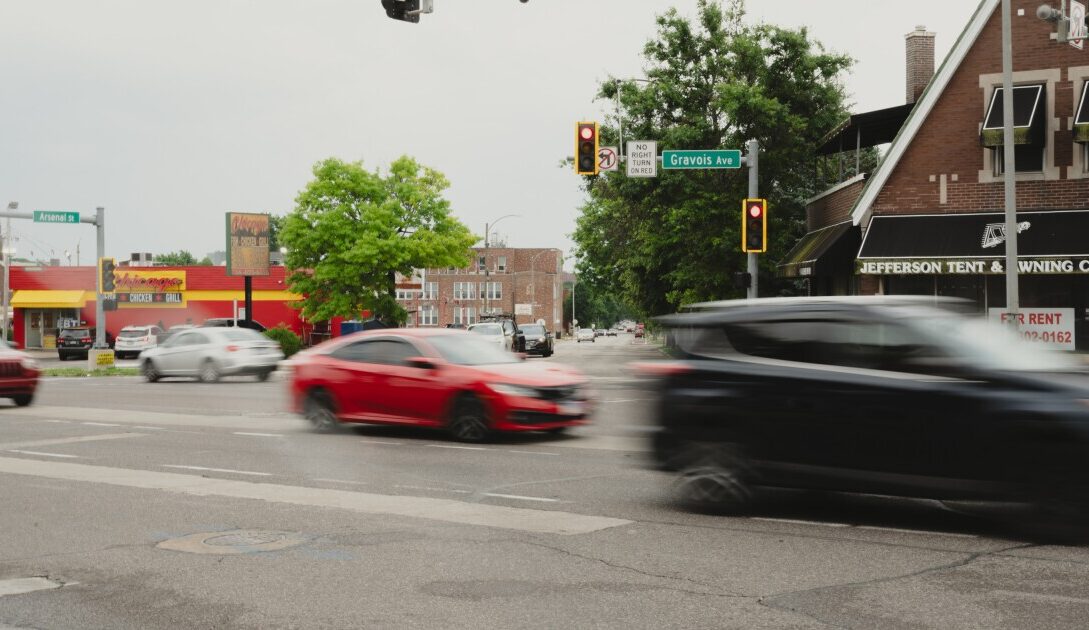
Road fatalities involving pedestrians decreased in St. Louis and St. Louis County compared to 2024, though cycling deaths rose significantly. The “State of Our Streets” report released Monday by nonprofit organization Trailnet examined state transportation safety data to reach these conclusions.
Walking-related deaths and mobility aid users dropped by 22 individuals year-over-year. Conversely, cyclist fatalities increased to five in 2025, up from zero in 2024.
Analysis reveals that fatal collisions predominantly occur on streets with speed limits ranging from 25 to 45 mph, particularly along major arterial roads featuring wide lanes that facilitate speeding. Dangerous intersections and areas just beyond them—where crossing becomes challenging—also account for a significant portion of deadly incidents.
Driver negligence constitutes the primary cause of pedestrian and cyclist fatalities, with contributing factors including poor visibility and improper roadway positioning. Notably, many fatal bicycle accidents occurred on streets lacking dedicated bike lanes or protective infrastructure.
Gravois Avenue recorded the highest crash frequency within city limits, while Lindbergh Boulevard (Highway 67) topped county statistics.
Since 2020, Trailnet has published annual regional crash assessments. This year’s edition broadens its scope to examine transportation-related policies, strategic plans, infrastructure development, and community advocacy initiatives.
According to Trailnet CEO Cindy Mense, enhanced street design could prevent numerous tragedies.
“Every person killed or seriously injured on our streets represents an immeasurable loss to a family and our community,” she stated. “These deaths are heartbreaking, and they show us where we need to make change. By slowing vehicle speeds, redesigning dangerous roads, expanding protected bicycle facilities, improving sidewalks, and adding safe and frequent crossings, we can prevent future tragedies. The solutions are known and spelled out in this report. Now we have to continue investing in them.”
Trailnet notes that regional stakeholders have adopted progressive transportation initiatives, including the City of St. Louis Transportation and Mobility Plan and revised Complete Streets standards, with corresponding infrastructure improvements. However, current data indicates substantial additional efforts remain necessary.