

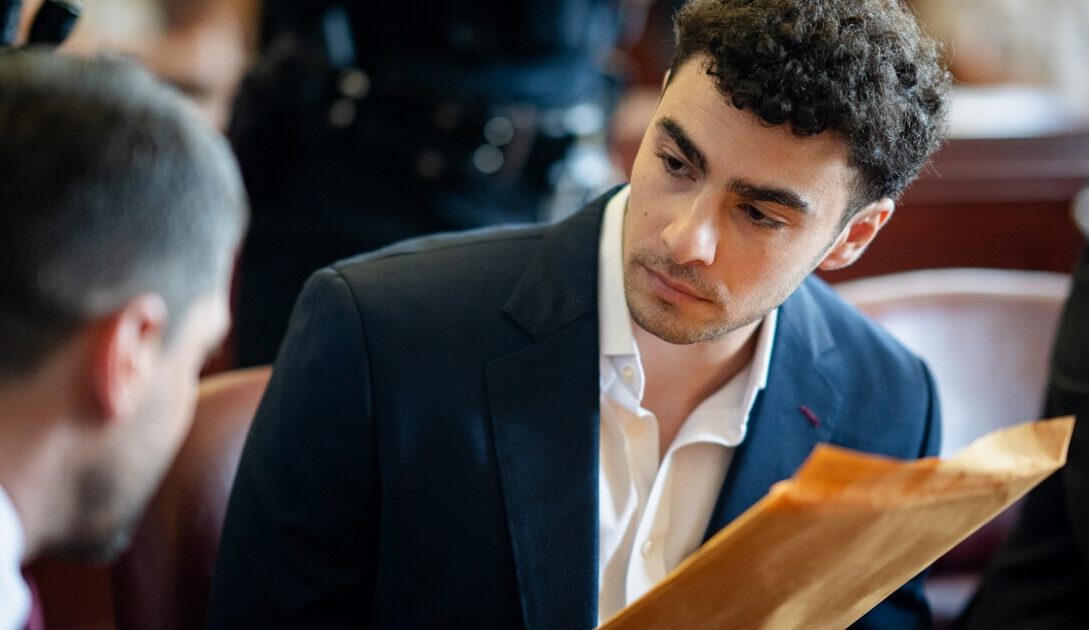
NEW YORK — In a surprising turn of events, Luigi Mangione’s legal team on Thursday abandoned plans to pursue a psychiatric defense ahead of his state trial scheduled for September. Mangione maintains a not guilty plea in connection with the 2024 death of health insurance CEO Brian Thompson, who was killed on a Manhattan street.
Just one day prior, during a hearing before state Judge Gregory Carro, Mangione’s attorneys revealed that he had been undergoing psychiatric evaluation. They indicated that their defense strategy would include arguments centered on Mangione’s claim of being in a state of “extreme emotional disturbance.”
However, Mangione’s legal team submitted a brief letter to Judge Carro on Thursday stating they would not present psychiatric evidence at trial. The reason for this abrupt change remains unclear. Mangione’s attorneys declined to provide a statement to NPR regarding the decision.
Gary Galperin, a former Manhattan prosecutor and legal expert, described Mangione’s decision to drop the psychiatric defense as a “stunning reversal.” He remarked, “The reasons behind this move can only be guessed at this time.”
“The central question moving forward is what defense strategy his team will actually employ during the trial,” he continued.
The decision followed Judge Carro’s directive requiring Mangione’s attorneys to promptly hand over psychiatric records to prosecutors.
“You must disclose what condition this defendant has and how it led to extreme emotional distress,” Carro stated during Wednesday’s proceeding. “I will not tolerate any surprises for the prosecution right before trial. Make it happen.”
Assistant Manhattan District Attorney Joel Seidemann had voiced repeated frustration that Mangione’s legal team was obstructing justice by refusing to share psychiatric details. “We have received absolutely nothing,” Seidemann stated.
Karen Friedman Agnifilo, Mangione’s primary attorney, rejected claims that her team was delaying or unlawfully concealing medical records.
Legal expert Richard Schoenstein suggests that by withdrawing the psychiatric defense, Mangione’s team “is sidestepping the court’s deadline to disclose psychiatric records.”
Schoenstein notes that while this action “does not completely eliminate” the possibility of using a psychiatric defense later, pursuing such an approach would now present significant challenges.
The Mangione case has captured international media attention. Legal professionals note that the 28-year-old defendant has received substantial public sympathy, partly due to his statements criticizing the health insurance sector. Thompson, a father of two, served as CEO of UnitedHealthcare at the time of his death.
During Wednesday’s hearing, Judge Carro also suggested that certain court records would be unsealed, potentially exposing information connected to Mangione’s psychiatric defense strategy. However, Judge Carro reversed this decision on Thursday.
In his formal order, Carro determined that because Mangione will not introduce psychiatric evidence, “the court maintains its prior ruling keeping certain transcripts, emails, and materials confidential.”
Mangione’s state trial commences in early September, with a separate federal trial scheduled afterward.
Copyright 2026 NPR